


Country
Greece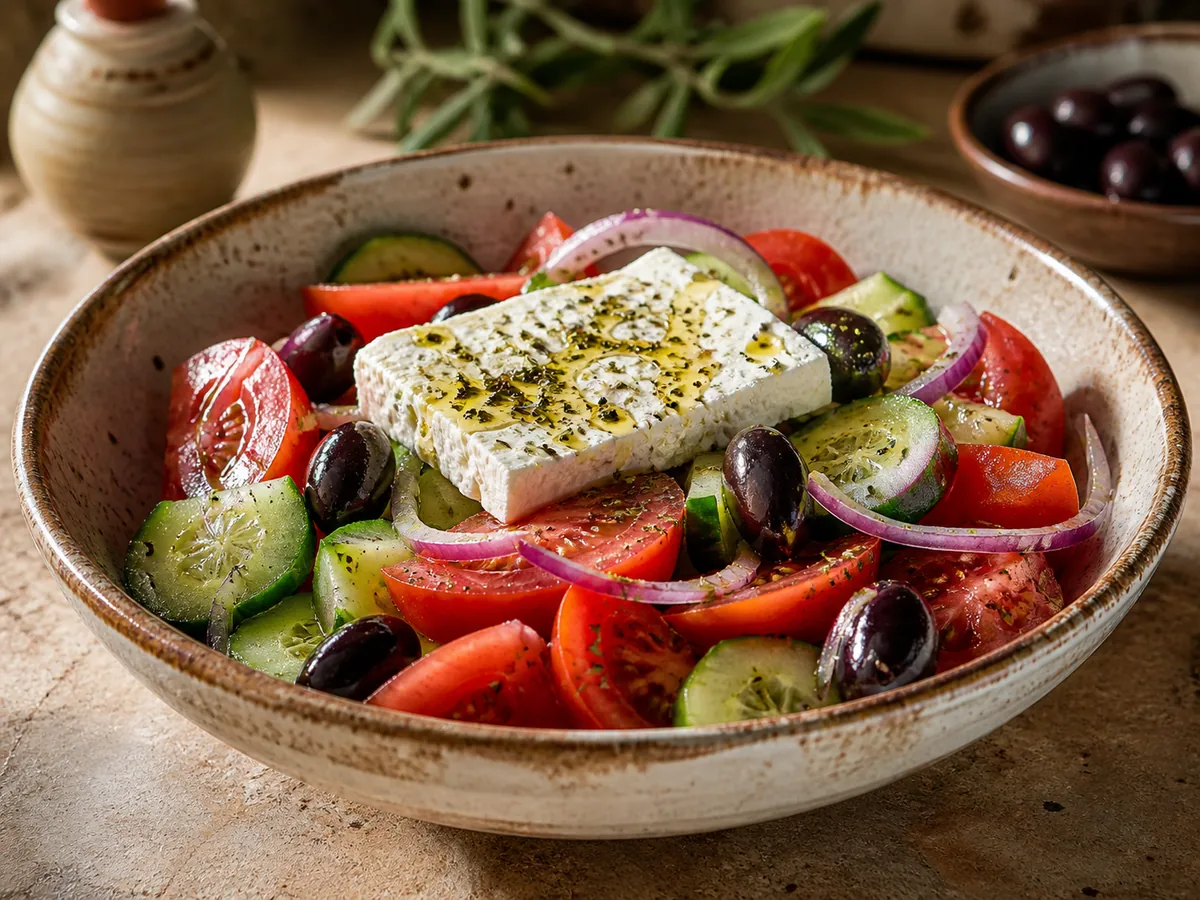
Greece · Greek
Greek Salad
A fresh Greek salad with tomato, cucumber, olives and feta, plus a vegan version that removes dairy while keeping the salad structure.
- Greek
- 15 min total time
- 4 base servings
Adapt this recipe
Customize this recipe
Adjust servings, version and allergens or avoidances to fit this recipe to your context.
Servings
Adapted for 4 servingsVersion
Active version: ClassicAllergens & avoidances
Choose if neededAdaptation status
Servings: 4 · Version: Classic · Check ingredients below
Always check ingredient labels and cross-contamination warnings.
Classic
A classic Greek salad with tomatoes, cucumber, onion, olives, feta, olive oil and oregano.
Contains dairy and lactose from feta; check rennet for strict vegetarian diets.
This version
- Classic
- Vegetarian
- Contains dairy
- Contains lactose
Version
Contains
Ingredients
- 400 g tomatoes
- 250 g cucumber
- 80 g red onion
- 100 g olives
- 150 g feta cheese Check that the feta uses vegetarian-suitable rennet if needed.
- 30 ml olive oil
- 2 g dried oregano
- 3 g fine salt
Cooking method
Preparation
- Cut the vegetables
Cut the tomatoes, cucumber and red onion into bite-size pieces.
- Add olives
Add the olives to the bowl and toss gently.
- Add the main topping
Add feta for the classic version, or chickpeas and extra olives for the vegan version.
- Dress
Drizzle with olive oil, sprinkle with oregano and salt, and toss lightly.
- Serve
Serve soon after seasoning so the vegetables stay crisp.
Frequently asked questions
Which version should I choose if I avoid lactose or milk protein?
Choose the vegan version. It removes feta cheese and keeps the tomato, cucumber, olive and oregano base.
Is the vegan version traditional?
No. It is an adapted version for dairy avoidance; classic Greek salad usually includes feta.
How should I store leftovers?
Refrigerate leftovers in a covered container. The salad is best when dressed close to serving.
Explore this recipe
More recipes like this

India · Indian
Aloo Gobi
A dry Indian-style potato and cauliflower dish with turmeric, onion and warm spices.